
The Electronic Bill of Lading in 2026: What's Blocking Adoption
Why paper bills of lading still dominate in 2026, what DCSA standards actually change, and a pragmatic checklist for going eBL without risk.
The technology to issue a bill of lading electronically has existed for over a decade. The legal frameworks to make it enforceable exist in most major trading jurisdictions now. Carriers have publicly committed to it. And yet most forwarders I talk to still print, courier, and chase original B/Ls in 2026. That gap between "the tech works" and "we actually do this" is the whole story. It's worth being precise about what's actually stuck, because the answer is not "nobody's built it yet."
The paper B/L isn't slow because it's paper
The bill of lading does three jobs at once: it's a receipt for the goods, evidence of the contract of carriage, and a document of title. That third job is the hard one. A document of title has to be provably singular, transferable, and enforceable in court if a dispute over ownership of the cargo ever lands there. Digitising a receipt is trivial. Digitising something that has to behave like a unique, negotiable instrument across multiple legal systems is not.
That's why the blockers aren't really technical anymore. They're:
- Legal recognition. An eBL needs a legal framework in the relevant jurisdiction that treats an electronic record as functionally equivalent to a paper document of title. Not every trade lane's governing law has caught up equally.
- Bank and LC acceptance. If the transaction runs on a letter of credit, the issuing and confirming banks need to accept the eBL platform's record as valid title documentation. One reluctant bank in the chain and you're back on paper for that shipment.
- Counterparty platform interoperability. If your carrier issues eBLs on one platform and your consignee's bank only recognises another, you have two working systems that can't talk to each other, which is functionally the same as having no system.
- Every party in the chain has to opt in. Shipper, carrier, consignee, bank, sometimes an insurer. One paper-only counterparty forces the whole document back to paper.
None of that is solved by any single vendor. It's solved by standardisation.
What DCSA actually changed, and what it didn't
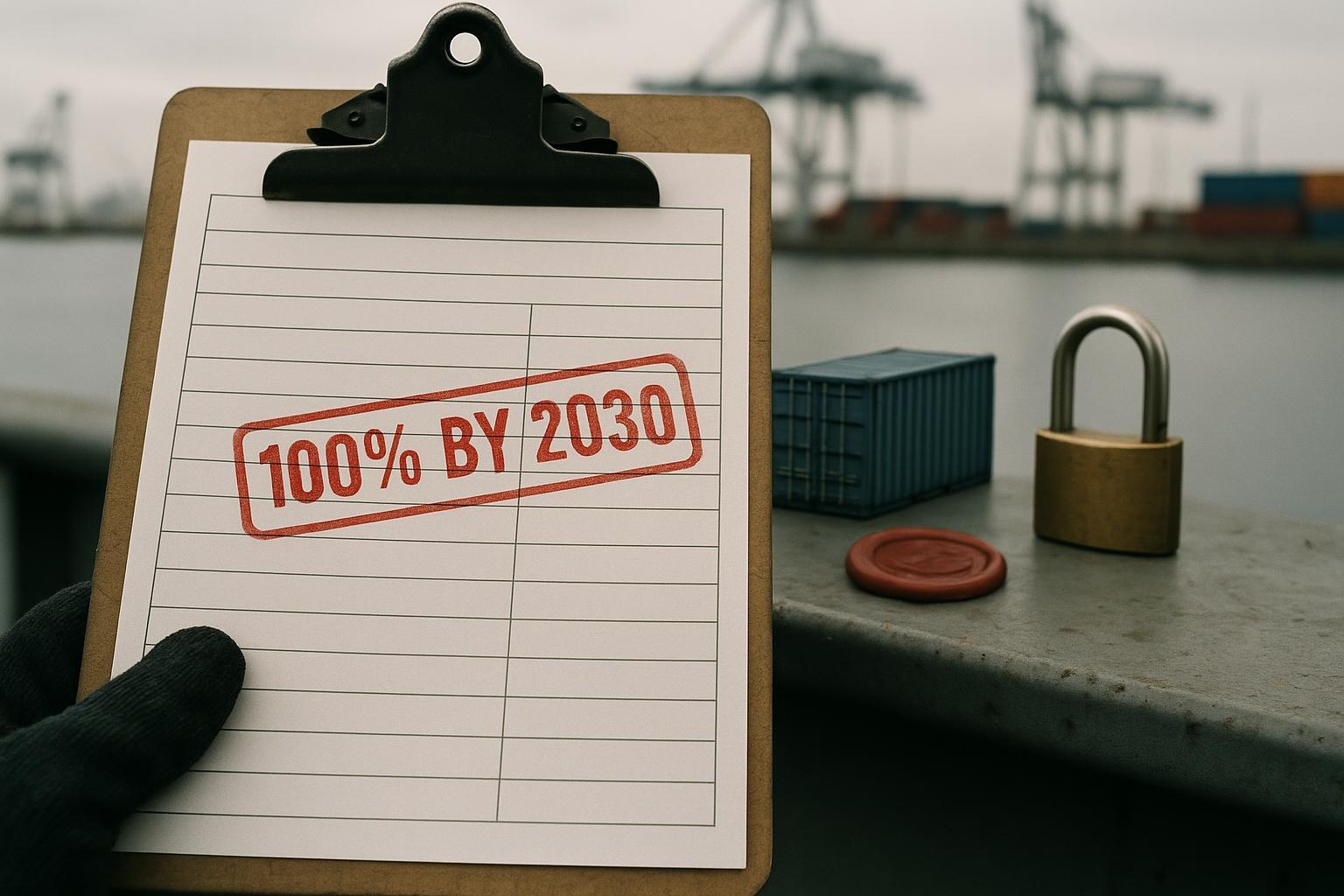
The Digital Container Shipping Association (DCSA) has published data and process standards for electronic bills of lading, aimed squarely at the interoperability problem: giving different platforms a common structure for eBL data so a document issued on one system can be understood, verified, and acted on by a counterparty on another. Alongside that, major container carriers have publicly committed to issuing 100% of their bills of lading electronically by 2030 under the DCSA initiative.
That's a real, citable commitment, and it matters. It means the demand side of "which platform do I even pick" starts to resolve itself, because the carriers who move most of the world's containers are pointing the same direction.
What it doesn't do:
- It doesn't make every jurisdiction's law recognise electronic title documents. That's a national legislation question, separate from carrier commitments.
- It doesn't force your bank, your consignee's bank, or your NVOCC partners to accept eBLs. Adoption at the carrier level and adoption at the banking and trading-partner level are two different curves, moving at different speeds. Where that gap currently stands for your own lanes is something only your bank, your consignee's bank, and your trading partners can tell you directly, ask before you commit a lane.
- It doesn't remove your operational risk if you go eBL on a lane where one counterparty still insists on paper.
Standardisation shrinks the technical excuse. It doesn't shrink the legal, banking, or trading-partner excuse. That's the part forwarders keep underestimating.
The actual cost of staying on paper, in your own numbers
Don't take an industry number for this, because there isn't a trustworthy one that applies to your book of business. Run your own:
shipments_per_month_with_original_bl = X
avg_courier_cost_per_original        = £Y
avg_days_saved_by_eBL_release        = Z days

monthly_courier_spend  = X * Y
demurrage_risk_days    = X * Z   (aggregate days of exposure across shipments
                                  where cargo sits waiting on an original B/L)
Multiply demurrage_risk_days by your actual demurrage/detention tariff on the lanes where you run tightest, and you have the real number that should decide whether an eBL pilot is worth the operational lift. For most forwarders the courier line is small change. The demurrage exposure line, on fast transpacific or intra-Asia lanes where the vessel can beat the paper, is usually where the case is actually made.
A go/no-go checklist before you commit a lane to eBL
Don't switch a trading relationship to eBL because a carrier rep asked nicely. Check this first:
lane_readiness_check:
  governing_law_recognises_electronic_title: yes/no
  bank_or_lc_issuer_accepts_this_eBL_platform: yes/no
  consignee_and_agent_onboarded_to_same_or_interoperable_platform: yes/no
  carrier_supports_eBL_on_this_trade_lane: yes/no
  fallback_to_paper_procedure_documented: yes/no
  cargowise_integration_handles_eBL_data_fields: yes/no

go_decision: all six must be yes
The last line matters more than it looks. An eBL that arrives as a PDF you rekey into CargoWise by hand isn't a digitisation win, it's just a different shaped paper problem. If your CargoWise instance can't ingest eBL release and title-transfer data as structured fields, you've moved the bottleneck, not removed it.
Where to actually start
Pick one lane: a repeat customer, a carrier who's already committed to eBL on that trade, and a bank or LC arrangement you've confirmed accepts it. Run it in parallel with your normal paper process for the first few shipments until you trust the fallback path. Don't roll it out fleet-wide before your CargoWise data model, not just your ops team, is ready for it.
If you're building or reviewing that integration layer, that's exactly the kind of CargoWise data-mapping problem the eAdapter series works through in detail.
Start with /eadapter if you want the CargoWise integration side worked out before you commit a lane to electronic title documents.
Ready to automate your document processing?
Join freight forwarders saving hours every week with CargoMode.
Start for free